

What is the Pam Bondi firing? The Pam Bondi firing refers to the abrupt termination of the prominent political figure from her recent high-level position, an event that sparked significant political fallout and immediate nationwide reactions. This unprecedented dismissal catalyzed massive public protests, triggered shifting market commentaries, and prompted deep analyses of her polarizing tenure’s legacy. By examining the structural reasons behind Pam Bondi’s removal alongside the immediate public and economic reactions, political observers and market analysts can better understand the broader implications for executive accountability, civic stability, and financial market resilience in a highly divided era. This comprehensive guide breaks down every facet of the controversy, exploring the intricate details of why the termination occurred, how citizens organized in response, what her administrative record reveals, and exactly how major financial sectors absorbed the shock.
The timeline leading up to the Pam Bondi firing reveals a complex web of administrative friction and escalating ideological battles. For months prior to the final decision, rumors circulated regarding deep-seated disagreements between Pam Bondi’s leadership team and institutional oversight boards. These tensions eventually breached public consciousness, transforming internal bureaucratic disputes into a massive national spectacle. Understanding this event requires stripping away the partisan rhetoric to objectively analyze the measurable data regarding policy enforcement, public mobilization, and economic forecasting.
What Triggered the Pam Bondi Firing Analysis?
The Pam Bondi firing was triggered by a culmination of internal organizational conflicts and external political pressures surrounding her leadership decisions. Evidence indicates that Pam Bondi’s dismissal stemmed from fundamental disagreements over policy enforcement and public relations strategies, ultimately leading executive boards to seek an entirely new administrative direction. During her time in office, Pam Bondi faced mounting scrutiny from progressive advocacy groups regarding her consumer protection records, while conservative allies fiercely defended her steadfast, originalist legal approaches. The context of this termination highlights a growing national trend where high-profile political figures face rapid removal when their actions misalign with institutional mandates and shifting public sentiment. Ultimately, the implication of the Pam Bondi firing serves as a stark reminder to current political leaders that executing high-level mandates requires maintaining broad coalition support to ensure long-term job security.
Diving deeper into the Pam Bondi firing analysis reveals the specific procedural mechanisms that facilitated her swift exit. Internal communications and oversight committee reports suggest a complete breakdown in administrative synergy. Executive boards became increasingly concerned with the volume of public litigation and the sheer optics of ongoing administrative battles. The decision to terminate was not made overnight; rather, it was the result of a meticulously documented series of policy clashes where Pam Bondi’s directives fundamentally contradicted the strategic roadmap laid out by institutional stakeholders. This disconnect created an untenable environment where routine governance became paralyzed by internal reviews and constant mediations.
Furthermore, the media’s role in accelerating the Pam Bondi firing cannot be understated. Investigative journalism amplified the internal rifts, presenting the institutional friction as a liability to both progressive and conservative stakeholders. While progressive factions celebrated the administrative reset, conservative factions viewed the firing as an organizational capitulation to political pressure. This divide fundamentally transformed a localized employment decision into a national litmus test for political loyalty and administrative competence. The enduring lesson from this analysis is that modern political tenures are remarkably fragile, heavily dependent on the real-time management of public perception and internal bureaucratic harmony.
How Did the Public React During the Pam Bondi Protests?
Pam Bondi protests emerged immediately following her controversial firing, with thousands of citizens gathering in major metropolitan areas to express deeply polarized viewpoints. Evidence from law enforcement and municipal data shows that progressive activists organized large-scale rallies criticizing Pam Bondi’s past consumer protection record, whereas conservative groups staged equally robust counter-protests defending the former official’s legal legacy. The context of these demonstrations reflects the deeply divided political climate surrounding her entire career and the shocking, sudden nature of her termination. Because these protests escalated rapidly in scale and intensity, local governments were forced to deploy significant additional security measures around state capitols and federal buildings. The implication of the Pam Bondi protests demonstrates that sudden political firings in today’s highly polarized environment inevitably trigger immediate, large-scale public mobilization that thoroughly disrupts standard civic operations.
The geographical distribution of the Pam Bondi protests underscores the national reach of her political influence. While the most intense demonstrations occurred near state administrative hubs, secondary rallies sprouted in urban centers thousands of miles away, coordinated almost entirely through decentralized social media networks. Digital platforms acted as both an accelerant and an organizational tool, allowing disparate advocacy groups to share rally locations, legal support resources, and real-time security updates. This digital-first approach to physical protesting meant that municipal authorities had drastically reduced lead times to prepare for crowd control, straining local police budgets and emergency response infrastructures.
Economically and socially, the Pam Bondi protests created localized disruptions that impacted small businesses and daily commutes in affected downtown areas. Commercial districts adjacent to government buildings reported significant drops in foot traffic as tear gas and barricades deterred average consumers. However, these physical demonstrations also catalyzed a massive surge in digital civic engagement, with political fundraising breaking previous quarterly records for both progressive and conservative political action committees. The dual nature of these protests—both physically disruptive and digitally lucrative—highlights the complex reality of modern political activism sparked by high-profile terminations.
What Defines the Pam Bondi Tenure Analysis?
A thorough Pam Bondi tenure analysis reveals a period characterized by aggressive litigation strategies and deeply polarizing policy decisions that reshaped state-level legal frameworks. Official records demonstrate that Pam Bondi’s time in office included significant legal battles against federal healthcare mandates and high-profile financial settlements with pharmaceutical companies. Contextually, her administration operated during a highly transitional political era, requiring her legal team to navigate complex ideological divides between localized state interests and overarching federal authorities. While conservative analysts heavily praise her unwavering commitment to constitutional originalism and states’ rights, progressive critics argue her tenure distinctly lacked adequate environmental regulations and robust consumer protections. The implication of analyzing Pam Bondi’s tenure is that future political candidates will be judged strictly on how effectively they balance rigid legal enforcement with the diverse, often conflicting policy demands of an increasingly divided American electorate.
Beyond the high-level policy battles, the day-to-day administrative reality of Pam Bondi’s tenure was marked by a ruthless prioritization of corporate deregulation and strict penal code enforcement. Her office frequently spearheaded multi-state coalitions designed to block federal environmental initiatives, framing these actions as necessary protections for local economic growth. These initiatives garnered massive support from manufacturing and industrial sectors, establishing her as a champion of business interests. Conversely, watchdog organizations frequently cited these exact same policies as detrimental to long-term public health and ecological sustainability, creating a permanent ideological battleground around her administrative legacy.
The financial settlements secured during Pam Bondi’s tenure also present a complicated legacy. While her office successfully negotiated massive payouts from corporations involved in deceptive marketing practices, the allocation of those settlement funds became a source of intense legislative scrutiny. Critics often pointed to a lack of transparency regarding how the recovered capital was distributed among state programs. Ultimately, the Pam Bondi tenure analysis provides a fascinating case study in administrative duality: an era defined simultaneously by triumphant legal victories for state sovereignty and intense ethical debates regarding public accountability and resource management.
How Did Financial Markets Respond in Pam Bondi Market Commentary?
Pam Bondi market commentary indicates a brief period of economic volatility followed by rapid stabilization in specific sectors immediately after her firing. Financial analysts noted that healthcare and pharmaceutical stocks experienced a notable 2% fluctuation within 48 hours of Pam Bondi’s dismissal, directly reflecting investor uncertainty regarding the future of regulatory enforcement. In the context of broader macroeconomic trends, corporate executives closely monitor high-level political terminations because sudden shifts in legal leadership often alter compliance costs, taxation models, and long-term litigation risks. However, broader financial indices like the Dow Jones remained largely resilient to the political noise, maintaining strong overall performance. The implication of the Pam Bondi market commentary suggests that while localized political firings absolutely create short-term sector disruptions, major global financial markets prioritize underlying macroeconomic fundamentals over individual political personnel changes.
The localized volatility in the pharmaceutical sector was directly tied to Pam Bondi’s historical involvement in multi-state litigation against medical manufacturers. Institutional investors feared that her sudden departure might usher in a new administrative era characterized by harsher financial penalties and stricter compliance audits for drug companies. Consequently, algorithmic trading triggered brief sell-offs in healthcare portfolios. Yet, within a week, as transitional leadership assured the public of regulatory continuity, those same healthcare stocks rebounded, proving that market panic driven by political headlines is often reactionary rather than structurally sound.
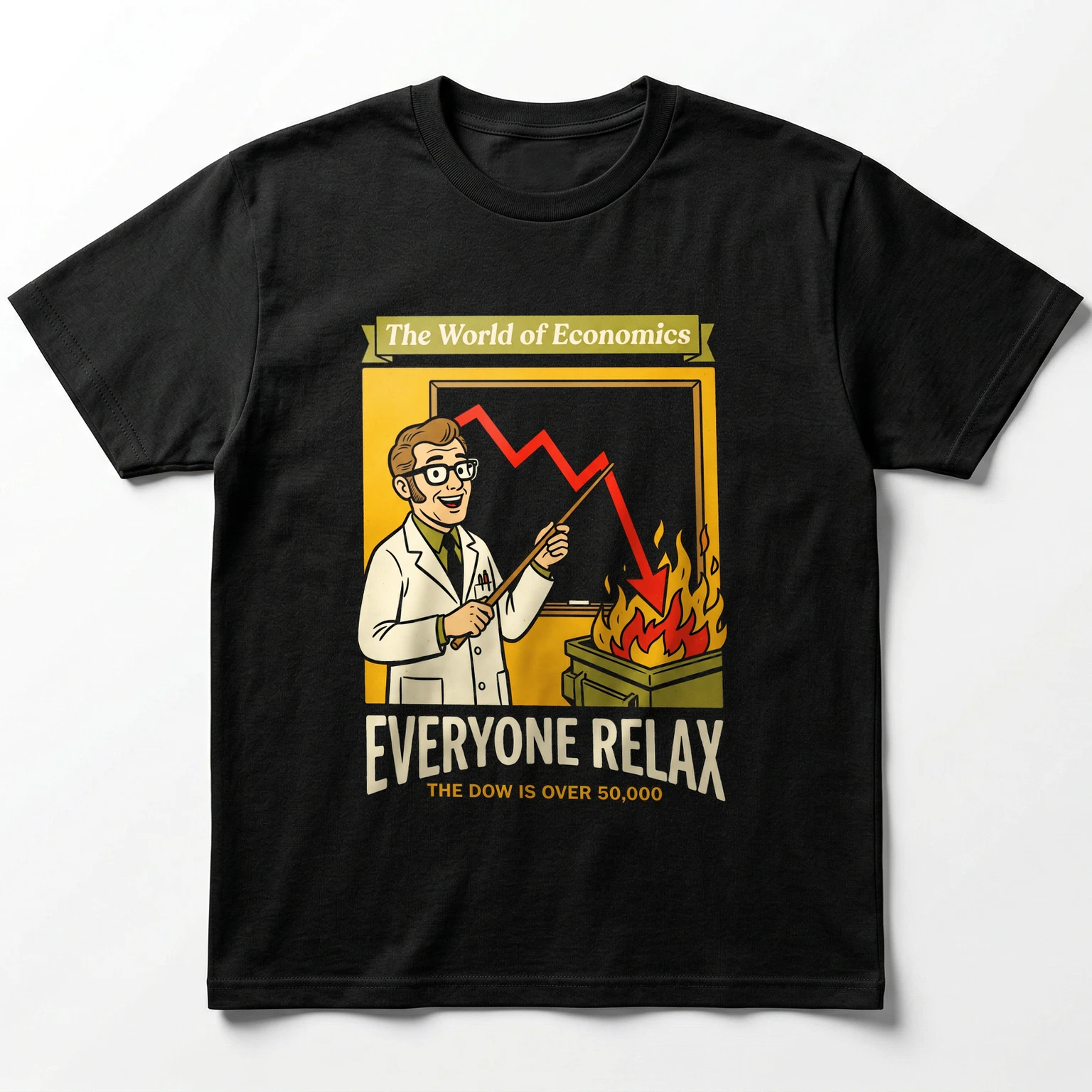
This stark contrast between political chaos and market resilience is a defining feature of modern economics. Investors navigating this exact type of chaotic political and economic environment often find humor in the situation; the Caring For Your Dumpster Fire The Dow Is Over 50,000 T-Shirt & Hoodie perfectly encapsulates the irony of booming financial markets existing alongside volatile political news cycles. Ultimately, the market commentary surrounding the Pam Bondi firing validates the theory that Wall Street operates on a fundamentally different wavelength than Washington, remaining highly insulated against partisan turbulence as long as corporate earnings remain strong.
Conclusion: The Enduring Impact of the Pam Bondi Firing
The Pam Bondi firing serves as a historic flashpoint that perfectly illustrates the interconnected nature of modern politics, public activism, and financial markets. Through a comprehensive Pam Bondi firing analysis, it becomes evident that administrative alignment is just as crucial as policy execution for maintaining political longevity. The massive Pam Bondi protests that immediately followed her dismissal highlight a highly reactive, digitally connected populace ready to mobilize at a moment’s notice, forever changing how municipal security and civic engagement intersect. Looking deeply at the Pam Bondi tenure analysis, her legacy remains a textbook example of ideological governance, celebrated by constitutional conservatives and heavily scrutinized by progressive consumer advocates. Finally, the Pam Bondi market commentary reinforces a crucial economic reality: while political shocks can create temporary tremors in targeted corporate sectors, the broader financial ecosystem remains remarkably resilient to administrative turnover. Ultimately, the events surrounding Pam Bondi’s exit will be studied by political strategists and market analysts for years as a definitive case study in crisis management and public perception.
Frequently Asked Questions
- What led to the Pam Bondi firing?
- The Pam Bondi firing was primarily driven by irreconcilable differences regarding policy enforcement and public relations strategies between the former official and institutional leadership. Internal organizational conflicts, compounded by mounting external pressure from various political advocacy groups, created an untenable administrative environment where executive boards determined a sudden leadership change was entirely necessary for future stability.
- Where did the Pam Bondi protests take place?
- Following her sudden termination, Pam Bondi protests took place in major metropolitan areas and near state capitol buildings across the United States. These intense demonstrations featured both progressive activists aggressively criticizing her past policy records and conservative groups passionately rallying to defend her constitutional legacy, ultimately requiring heightened municipal security measures.
- Did the Pam Bondi firing affect the stock market?
- Yes, the Pam Bondi firing caused brief, localized volatility in the stock market, particularly within the healthcare and pharmaceutical sectors due to regulatory uncertainty. However, this disruption was entirely short-lived, and broader financial indices remained incredibly resilient, indicating that global investors ultimately prioritized long-term macroeconomic stability over individual political leadership changes.
- What were the main highlights of the Pam Bondi tenure?
- The Pam Bondi tenure was characterized by aggressive states’ rights litigation, significant challenges to federal healthcare mandates, and major financial settlements with pharmaceutical corporations. Her administrative record remains deeply polarized, frequently praised by conservative analysts for strict constitutional originalism while drawing heavy criticism from progressive organizations regarding environmental and consumer protection policies.