

Understanding the Pam Bondi Firing Controversy
The Pam Bondi firing refers to the abrupt and highly controversial termination of the prominent political figure from her leadership position, an event that has triggered widespread public demonstrations and intense economic scrutiny. This sudden dismissal disrupted established political alliances and immediately altered the landscape of domestic regulatory policy. Following the announcement, progressive and conservative factions mobilized rapidly, transforming a localized administrative decision into a national ideological battleground. By analyzing the circumstances surrounding the Pam Bondi firing, observers can understand the fragile nature of modern political appointments and the swift consequences of executive discord. The fallout from this event extends beyond government halls, prompting deep dives into her historical tenure, sparking massive street protests, and generating significant market commentary from financial analysts attempting to predict the resulting economic trajectory.
Pam Bondi Protests
The Pam Bondi protests emerged as large-scale, highly polarized public demonstrations following the sudden dismissal of the high-profile official. Citizens and political action committees organized rallies across major metropolitan areas to voice strong opposition and support regarding the executive decision to terminate her employment. Progressive activist groups mobilized quickly to demand complete transparency surrounding the administrative firing, arguing that the public deserved access to the internal communications that led to the ouster. Conversely, conservative factions held massive counter-protests defending the Pam Bondi political record and questioning the legal authority and underlying motives behind her abrupt removal.
Geographic and Demographic Hotspots
The geographical distribution of the Pam Bondi protests reveals a deeply divided electorate, with the most intense demonstrations occurring near state capitols and federal courthouses. Demographic analysis of the crowds indicates that younger, progressively aligned voters dominated the initial waves of protest, while older, conservatively aligned voters constituted the majority of the subsequent counter-rallies. Law enforcement agencies in these urban centers were forced to deploy riot control measures and establish heavily barricaded protest zones to prevent physical altercations between the ideological factions. This polarization highlights the deep political divides triggered directly by the Pam Bondi firing event.
Long-term Impact on Civil Discourse
The intensity of the Pam Bondi protests indicates a broader breakdown in civil political discourse, where administrative personnel changes are increasingly treated as existential threats by political partisans. Sociologists note that these demonstrations have successfully weaponized public spaces, forcing local governments to expend significant resources managing civil unrest rather than addressing municipal issues. Ultimately, the scale and sustained momentum of these protests underscore the significant influence Pam Bondi held during her tenure and the volatile nature of current political appointments in a hyper-partisan era.
Pam Bondi Market Commentary
Pam Bondi market commentary reflects the financial sector’s immediate reaction to the sudden political instability caused by her unexpected administrative dismissal. Financial analysts observed immediate fluctuations in sectors heavily regulated by her office, particularly within corporate law, institutional banking, and domestic trade policy. Wall Street strategists aggressively debated whether the Pam Bondi firing would lead to stricter regulatory environments under new leadership or initiate a period of disruptive, unchecked deregulation.
Economic Disconnect and Consumer Sentiment
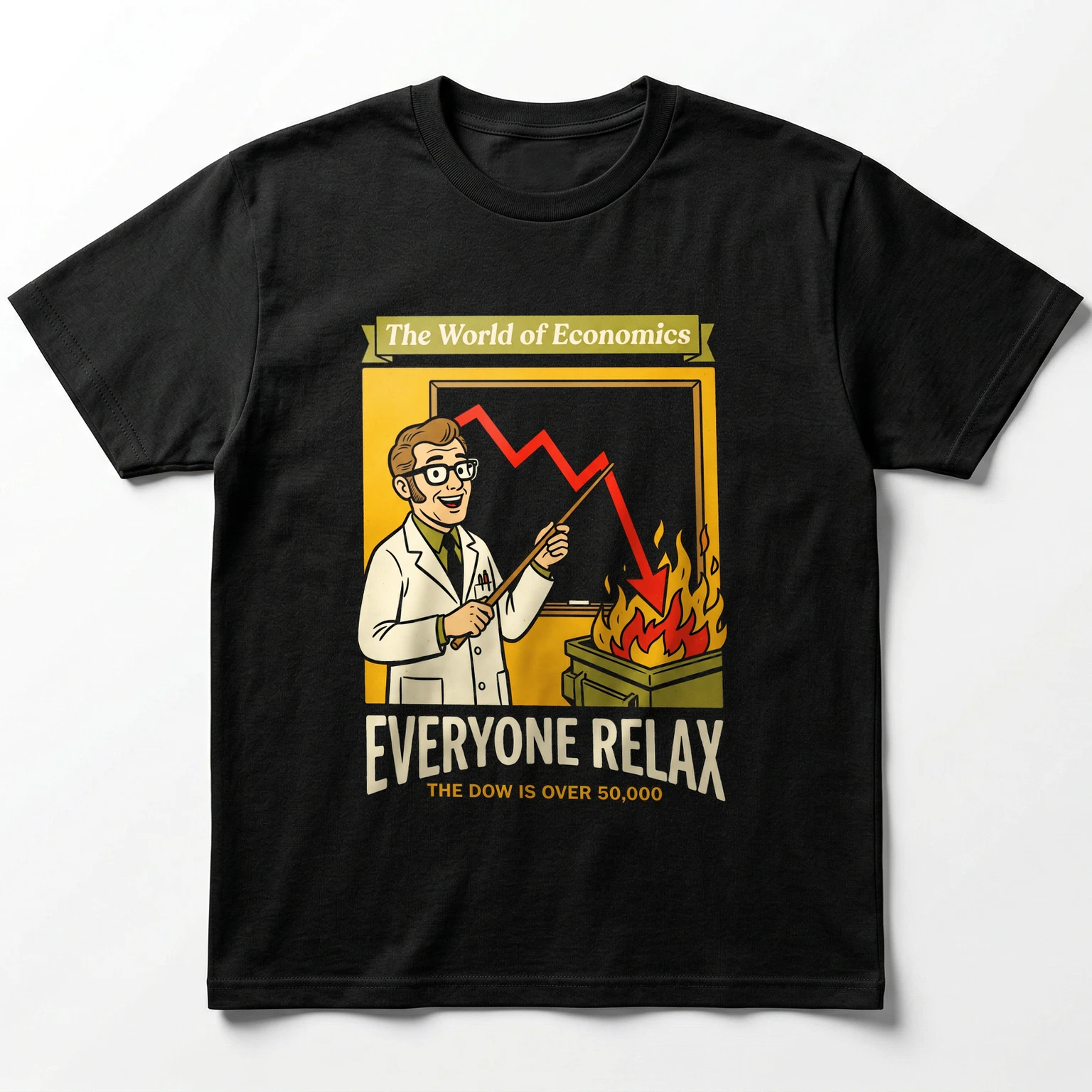
Despite the political turmoil surrounding the firing, broader market indices remained remarkably resilient, prompting economic observers to note the fascinating disconnect between political shockwaves and actual corporate performance. While punditry focused on governmental chaos, institutional investors continued to drive market highs, relying on underlying corporate fundamentals rather than administrative drama. For financial enthusiasts and retail investors who watch these economic trends with a sense of humor, apparel like The World of Economics Everyone Relax The Dow Is Over 50,000 T-Shirt & Hoodie captures the ironic calm of the stock market amidst swirling government controversies. This cultural response demonstrates how retail investors often utilize satire to cope with the dissonance between alarming news cycles and bullish portfolios.
Long-term Institutional Strategy
Pam Bondi market commentary consistently indicates that while high-profile political firings generate sensational headlines, institutional market momentum often sustains its own independent trajectory. Asset managers have largely advised clients to ignore the partisan noise generated by the dismissal, focusing instead on quarterly earnings reports and Federal Reserve interest rate decisions. The consensus among financial experts evaluating the Pam Bondi firing is that political personnel changes rarely alter the foundational mechanics of the global economy, rendering much of the immediate panic purely speculative.
Pam Bondi Tenure Analysis
Pam Bondi tenure analysis involves the systematic evaluation of her policy decisions, legal enforcement priorities, and administrative impact during her highly scrutinized time in office. Legal scholars and political historians generally assess the Pam Bondi term as one characterized by aggressive litigation strategies and strict adherence to conservative legal doctrines. During her tenure, Pam Bondi prioritized state-level sovereignty and frequently utilized the judicial system to challenge federal mandates, a strategy that earned high praise from conservative bases while drawing sharp, sustained criticism from progressive civil rights advocates.
Major Legislative and Legal Battles
Examining the administrative record reveals a focused effort by Pam Bondi to reshape regulatory frameworks and prioritize specific, highly partisan law enforcement initiatives. Her office frequently engaged in high-stakes legal battles involving healthcare policy, environmental deregulation, and corporate tax enforcement. Tenure analysts point to these specific court cases as the defining moments of her career, demonstrating a willingness to leverage state power to achieve ideological goals. The aggressive nature of these lawsuits alienated moderate political allies and ultimately laid the groundwork for the institutional friction that caused her termination.
Evaluating the Historical Legacy
The ultimate legacy of the Pam Bondi tenure remains highly contested among political scientists, as analysts weigh her undeniable legislative victories against the ethical controversies that eventually culminated in her abrupt termination. Proponents argue that her tenure successfully restrained federal overreach and protected regional economic interests from burdensome regulations. Critics argue that the Pam Bondi tenure degraded institutional norms and politicized the justice system for personal career advancement. This polarized tenure analysis guarantees that her historical footprint will be debated long after the immediate shock of her firing dissipates.
Pam Bondi Firing Analysis
Pam Bondi firing analysis examines the legal, political, and administrative catalysts that ultimately led to her sudden removal from a high-profile government leadership position. Political scientists attribute the controversial dismissal to a toxic combination of internal administrative conflicts, rapidly shifting partisan alliances, and mounting public pressure from opposition groups. The structural mechanics of the Pam Bondi firing reveal deep ideological rifts within the governing executive body, where her rigid policy stances and aggressive public persona ultimately alienated the key stakeholders necessary for her continued employment.
The Timeline of Termination
By carefully dissecting the timeline of her termination, legal experts can identify the critical moments where executive support for Pam Bondi permanently fractured. The firing was preceded by a series of leaked internal memos that highlighted fundamental disagreements regarding enforcement priorities and budget allocations. Once these administrative disputes became public knowledge, the executive branch was forced to act decisively to restore perceived order and institutional harmony. The timeline confirms that the Pam Bondi firing was not a spontaneous decision, but rather the culmination of months of behind-the-scenes political maneuvering and institutional decay.
Precedents Set by the Dismissal
The broader implications of the Pam Bondi firing extend far beyond her individual political career, actively setting new procedural precedents for how controversial political appointees are managed, disciplined, and removed from positions of power. Constitutional scholars warn that the aggressive methodology used to execute the firing may normalize the rapid termination of civil servants who simply disagree with executive leadership. Comprehensive Pam Bondi firing analysis suggests that future administrations will study this event as a blueprint for removing deeply entrenched, adversarial personnel without triggering prolonged judicial review.
Frequently Asked Questions
- What sparked the Pam Bondi protests?
- The Pam Bondi protests were sparked directly by the abrupt and controversial termination of Pam Bondi from her prominent leadership role. Progressive groups organized rallies to demand transparency regarding the administrative decision, while conservative factions held counter-protests to defend her political record and denounce the firing. These demonstrations highlight deep partisan divides over her legacy.
- How did the financial markets react to the Pam Bondi firing?
- Financial markets reacted to the Pam Bondi firing with brief, localized volatility in sectors that were heavily regulated by her office, such as corporate banking and domestic trade. However, broader market indices remained largely stable. Financial analysts noted that the overall economy proved resilient, demonstrating a disconnect between political drama and institutional stock market performance.
- What characterized the Pam Bondi tenure in office?
- The Pam Bondi tenure was characterized by aggressive litigation strategies, a focus on state sovereignty, and strict adherence to conservative legal frameworks. Her time in office featured numerous high-profile legal battles challenging federal mandates, which earned her strong support from conservative voters but generated intense criticism from progressive advocates regarding her policy priorities.
- Why was Pam Bondi fired from her position?
- Pam Bondi was fired due to a combination of escalating internal administrative conflicts, shifting political alliances, and disagreements over enforcement priorities. Political analysts indicate that her rigid policy stances alienated key stakeholders within the executive branch. Leaked internal memos revealed deep institutional friction that ultimately forced leadership to terminate her employment to restore administrative order.